
The Power of Saying ‘No’
Reclaiming Your Peace and Energy
In our earlier decades, life was often about collection and acquisition. We collected relationships, obligations, commitments, and titles. Our default answer was almost always ‘yes.’ We said ‘yes’ to social events we didn’t enjoy, ‘yes’ to favors that drained us, and ‘yes’ to roles that we had outgrown. We believed that ‘yes’ was the path to connection, success, and acceptance.
But as we navigate our seasoned years, the geometry of our lives shifts. We are no longer focused on accumulation; we are focused on intentional refinement. We realize that our most precious resources—our time, our attention, and our physical energy—are finite. They are not to be squandered; they are to be guarded with fierce intention.
The single most powerful tool we possess for protecting our peace and our vitality is a simple, monosyllabic word that we spend half our lives avoiding: ‘No.’
Moving Beyond the Guilt
For many of us, saying ‘no’ is deeply uncomfortable. We were socialized to be people pleasers, to be agreeable, and to be “available.” We worry that saying ‘no’ is an act of selfishness, that it will create conflict, or that it will sever connections we have worked hard to build.
But a ‘no’ that protects your peace is never an act of aggression; it is an act of self-preservation. It is the practical application of wisdom.
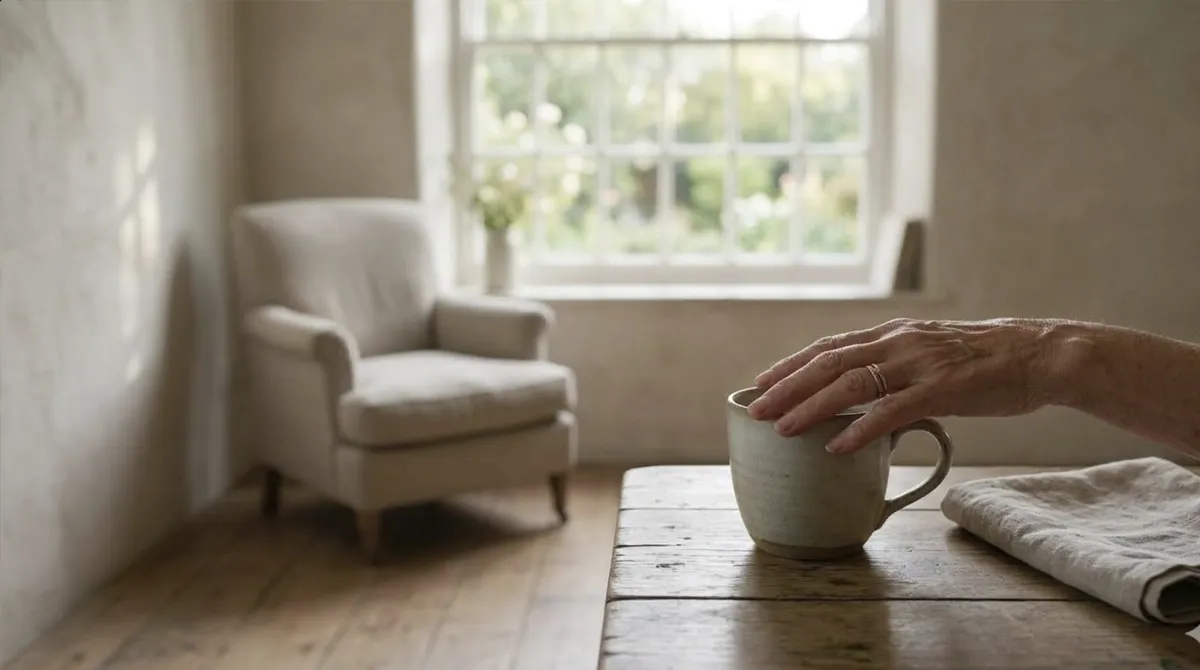
In your 60s, a ‘no’ is not about closing yourself off from the world. It is about closing yourself off from the chaos that no longer serves you. It is the understanding that you cannot pour from an empty cup. When you say ‘no’ to a demanding social obligation or a favor that causes you anxiety, you are not rejecting the person; you are rejecting the role that would drain your functional vitality.
Mastering the Graceful ‘No’
Saying ‘no’ does not require harshness. It requires clarity and grace. A ‘no’ can be as gentle as a ‘yes’ if it is delivered with confidence. The key is in removing the need to over-explain or justify your decision. A simple, polite decline is all that is necessary.
Consider these graceful shifts:
1. The Grateful Decline: “Thank you so much for the invitation. I won’t be able to make it, but I appreciate you thinking of me.” This acknowledges the connection while firmly setting the boundary. There is no need for apologies or a list of reasons why you can’t go.
2. The Space Holder: “I am currently focusing my energy on some personal priorities right now, so I will have to pass this time.” This signals to the other person that your availability is limited for a valid reason, without revealing the specifics. It centers your decisions on intentional living.
3. The Honesty Pivot: “I am very protective of my downtime these days, and I am actually taking the evening to rest.” This honors your commitment to self-care and functional wellness. It normalizes rest as a priority, which is a key part of seasoned wisdom.
A shared neighborhood for seasoned points of view
As a graphic designer with a deep following, you have built a community around shared aesthetics and values. Your blog is an extension of that “shared neighborhood.” It is a space where a seasoned point of view is celebrated.
When you master the art of the ‘no,’ you are modeling a different perspective for your community. You are showing them that life after fifty is not about “slowing down” or fading away; it is about becoming more selective.
A well-placed ‘no’ is the highest form of self-care. It declutters your calendar just as you might declutter your home. It creates the spaciousness needed to enjoy your morning reset, your deep reading, or simply a moment of quiet reflection in your own company. Protect your peace. Honor your energy. And lean into the profound power of a graceful, confident ‘no.’